Organisations

Build a mental-health support route your community can trust.

Mindful Message is for organisations that see the gap between generic support and support that feels culturally understandable, linguistically approachable, and operationally safe.

Diverse group portrait

Community organisations

Support service users whose language, culture, faith, migration history, or family context can affect how help is accessed.

Education and youth teams

Coordinate under-18 referrals, consent authority, safeguarding context, and status visibility for school or youth-service pathways.

Health and wellbeing partners

Add a culturally aware counselling pathway alongside existing wellbeing, EAP, social-prescribing, or community-care work.

Organisation role flow

From service setup to outcome review, the organisation journey stays controlled.

This is the end-to-end path for a partner organisation using Mindful Message: set the pathway, submit referrals, track progress, coordinate delivery, and review evidence without broad clinical exposure.

  1. Phase 1

    Service setup

    Define the referral pathway

    The organisation agrees who can refer, which communities are in scope, what consent is required, and which professional coverage is needed.

    Role action
    Confirm referral criteria, owner responsibilities, contract coverage, safeguarding routes, and visibility expectations.
    Platform support
    Contracts, organisation account setup, privacy routes, and role boundaries prepare the service before referrals open.
  2. Phase 2

    Intake

    Submit a structured referral

    A nominated organisation user captures the service-user context needed for safe review without spreading sensitive detail through emails.

    Role action
    Submit referral information, consent authority, communication needs, relevant background, and urgency context.
    Platform support
    The referral route creates a controlled workflow record and keeps operational status separate from restricted professional detail.
  3. Phase 3

    Review

    Track acceptance and allocation

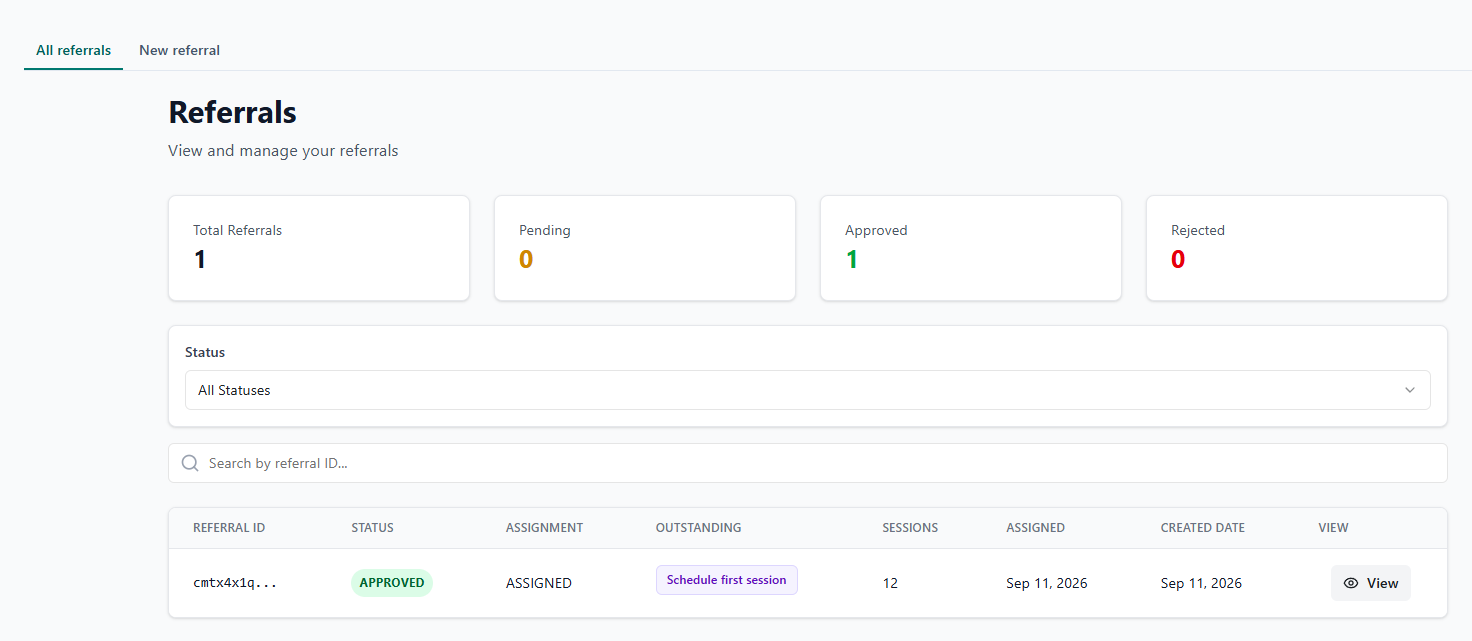
    The organisation can see whether a referral is pending, approved, assigned, in progress, completed, rejected, or cancelled.

    Role action
    Monitor referral status, respond to admin follow-up, and keep the referring team aligned on next steps.
    Platform support
    Admin review and counsellor allocation happen in the platform with status visibility for the referring organisation.
  4. Phase 4

    Delivery

    Stay informed without overexposure

    Organisation teams get enough workflow visibility to support the person while clinical, assessment, and feedback details stay restricted.

    Role action
    Use status updates to coordinate internally, avoid duplicating sensitive records, and escalate through agreed routes when needed.
    Platform support
    Role-based access, redacted views, audit events, and privacy request routes reduce unnecessary data exposure.
  5. Phase 5

    Outcomes

    Review service evidence

    The organisation receives agreed operational evidence so the pathway can improve without turning every partner into a clinical-record viewer.

    Role action
    Review aggregate progress, referral movement, service fit, and agreed governance actions.
    Platform support
    Reporting, billing evidence, privacy controls, and closure workflows help the service improve over time.

Referral design questions

Good referral design keeps people, privacy, and service delivery aligned.

Who can submit referrals and what consent authority must be captured.

Which organisation users only need status visibility.

Which professional types and languages are needed for the community.

How safeguarding, complaints, privacy requests, and handoff should be routed.

What evidence will show the pathway is working.